
A client asked me last week how many of their buyers were starting their research inside ChatGPT instead of Google. I didn't have an exact number, but the answer is closer to half than most marketers want to admit. And for certain B2B and high-consideration verticals, it's already the majority.
Search hasn't died. It's split. One half of buyer journeys still runs through the classic Google flow, query, list of blue links, click, land, convert. The other half happens in an entirely new interface where a user asks a natural-language question and an AI engine returns a synthesized answer with three or four cited sources stitched into the response. No SERP. No blue links. No scroll.
If you want to show up in that second half, you need a different playbook. This guide is that playbook. I've spent the last 24 months stress-testing what actually works in AEO agency campaigns across dozens of client accounts. Everything below is what's working right now in April 2026, not what was working when ChatGPT first launched, and not what I predict will work in 2028. Just the field-tested playbook.
What GEO actually is (and isn't)
Generative Engine Optimization (GEO) is the practice of engineering your content, structure, authority, and off-site signals so that large language models and AI search engines cite you, quote you, and recommend you when users ask questions in your domain.
Note the word cite. That's the whole game. In classic SEO, success looks like a click, someone lands on your site from a search result. In GEO, success often looks like a mention, your brand name appears inside an AI-generated answer, with or without a click. The business impact is real even when the click isn't, because AI responses shape perception, shortlist decisions, and buying intent long before a user ever visits your site.
SEO is about ranking. GEO is about being the answer. The difference is that a list of blue links lets the user pick a winner, an AI response already picked one. You want to be that pick.
GEO is not the same as fine-tuning an LLM. Nobody is training ChatGPT on your blog posts. What GEO does is optimize the external signals, the content, structure, trust markers, and context, that influence how an already-trained AI surfaces and credits your content when it answers relevant questions. You're not teaching the model. You're making yourself a high-quality input the model already relies on.
GEO also overlaps with, but doesn't replace, AEO (Answer Engine Optimization). The two terms are used interchangeably by a lot of marketers. I use GEO when talking about the broader strategy across all generative engines, and AEO when talking specifically about tactics for being the chosen answer to a defined question. For clients, the distinction rarely matters. The work is the same.
Why GEO is a 2026 priority, not a 2028 one
Three things changed in the last 24 months that make this urgent rather than hypothetical.
First, AI search adoption crossed the chasm. ChatGPT reached 800 million weekly active users in early 2025, doubling from 400 million in a single quarter. Perplexity crossed 100 million monthly active users. Google quietly rolled out AI Overviews on 57% of U.S. SERPs. If your buyers are under 45, they're already starting a meaningful percentage of product research inside an AI engine.
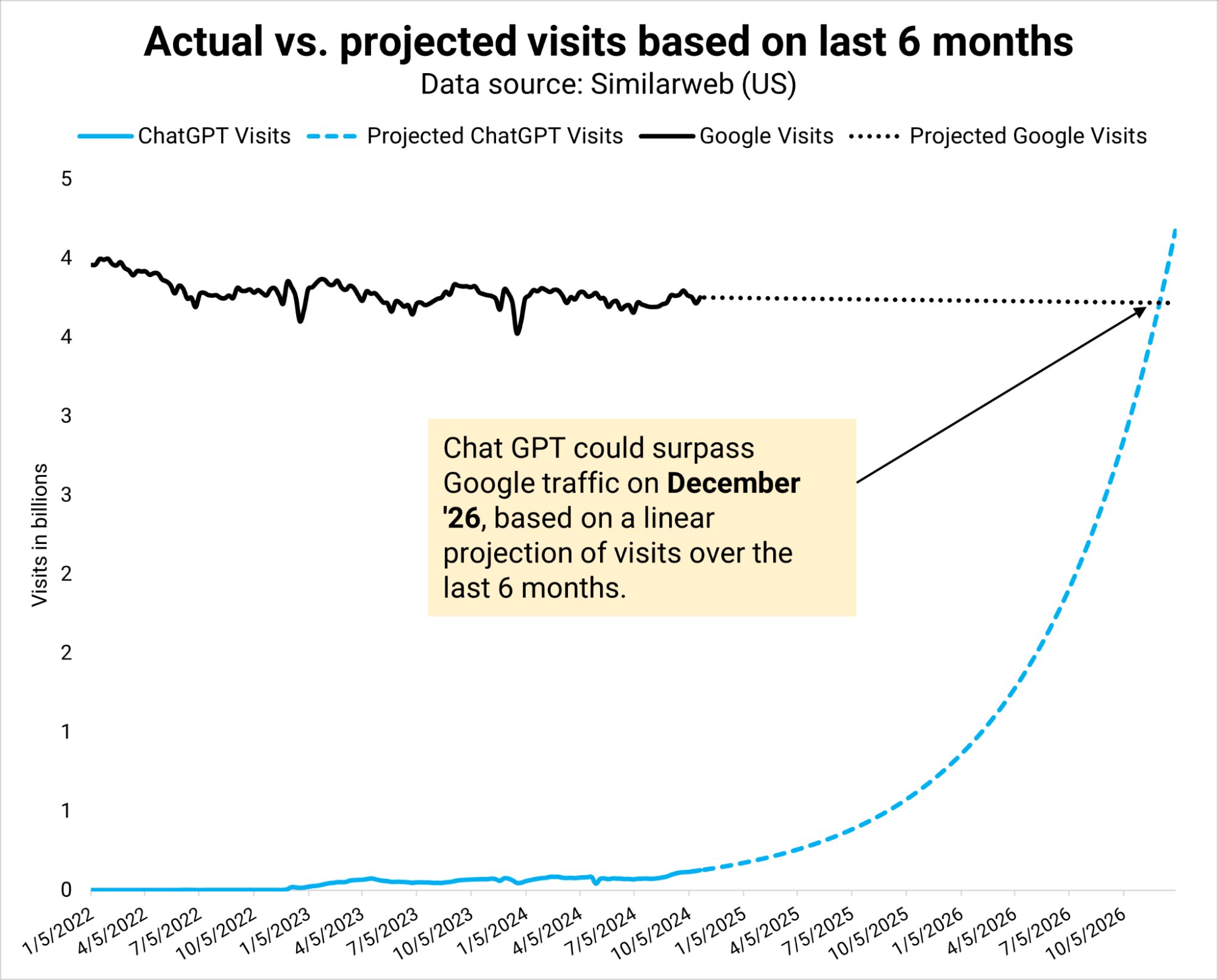
Second, Google's own results started feeling like AI results. The zero-click search rate, searches that end without any click to an external site, hit 60% in 2024, up from 26% in 2022. That's not because users gave up. It's because they found the answer inside Google's AI Overviews, featured snippets, and knowledge panels without needing to click. Your website content is now feeding AI boxes that keep users from visiting your website.
Third, the brands that moved early are building compounding moats. When an AI engine cites you once, it's more likely to cite you again on related queries because your content is already in its retrieval context. Early GEO investments aren't linear, they compound. Every month you wait is a month a competitor gets to become the default answer in your vertical.
This is exactly why we built our AEO agency services around AI citation as the primary deliverable. Rankings are a lagging metric now. Citations in AI answers are the leading one.
How AI engines actually choose what to cite
If you want to game a system, first understand how it works. Here's the simplified reality of how a modern AI search engine decides what to cite:
Step 1: Query understanding. The AI parses your question, identifies intent, and decides whether this is a factual question (needs citations), a creative task (doesn't), or a reasoning task (mixed). For factual and commercial queries, the engine retrieves supporting content before answering.
Step 2: Retrieval. The AI pulls a small set of relevant passages from its training data and/or a live web index. This step uses semantic similarity, not keyword matching, to find content that conceptually answers the question. Some engines (Perplexity, Gemini, ChatGPT with browsing) do this live against the open web. Others (older ChatGPT, Claude) pull from training data.
Step 3: Source scoring. The engine ranks retrieved sources on a mix of factors: authority of the domain, freshness, how directly the content answers the question, how cleanly it's structured, how trustworthy the author signals are, and whether the passage is citation-worthy (i.e., contains a clear, attributable claim).
Step 4: Synthesis. The AI writes an answer that blends the top retrieved sources, typically surfacing 3-5 citations. If your passage was clear, specific, and attribution-friendly, you get named. If it was buried in fluff or phrased ambiguously, a competitor gets the citation instead.
The winning strategy isn't "make better content." It's "make content that survives step 4." Your passage has to be extractable, a self-contained, quotable chunk an AI can lift out of context.
GEO vs SEO: the ranking signals that actually transfer
A lot of SEO expertise transfers directly to GEO. Some does not. Here's how it breaks down:
| Signal | SEO Impact | GEO Impact |
|---|---|---|
| Domain authority / backlinks | High | Moderate, correlates with citation rate but doesn't guarantee it |
| Exact-match keywords | High | Low, AI uses semantic matching, not string matching |
| Content structure (H2/H3, lists, tables) | Moderate | Very high, clean structure helps AI extract passages |
| Schema markup | Moderate | High, FAQ, Article, HowTo schema feed AI context |
| Content freshness | Moderate | High, AI engines disproportionately cite fresh content |
| Author E-E-A-T signals | Moderate | Very high, named authors with real credentials get cited more |
| Technical crawlability | Critical | Critical, if AI crawlers can't read you, you're invisible |
| Brand mentions (unlinked) | Low | High, AI trains on mentions with or without links |
| Original research / data | Moderate | Very high, unique stats are catnip for citations |
The two biggest shifts: brand mentions matter more than backlinks in GEO, and structure matters more than keyword density. If you've been chasing local SEO agency wins with traditional ranking signals, you already have 60% of what GEO rewards. The other 40% is the work below.
The six pillars of a GEO strategy that actually works
1. Citation-worthy passage design
Every long-form article should contain at least 5-10 passages that stand alone as quotable answers. These are typically 40-80 word chunks that directly answer a specific question with a specific, attributable claim. Lead with the answer, then add context. No preamble, no "let's dive in," no throat-clearing.
When I audit a client's content for AEO potential, I literally ask: "If an AI pulled out any 50-word chunk of this page, would that chunk be a useful, self-contained answer?" If the answer is no for most of the page, the page won't get cited.
2. Question-first content architecture
Think about how people actually talk to AI engines. They ask full questions. "What's the best CRM for a 10-person home services company?" Not "CRM home services." Your content needs to be organized around real questions, not broad keyword clusters.
Use H2s and H3s that are literal questions. Put the answer directly beneath the heading. Add a FAQ section at the bottom of every major page. Use FAQ schema on those questions. This is the single highest-ROI technical change most sites can make today.
3. Named author authority
AI engines heavily weight named, credentialed authors. A post bylined as "admin" or "Content Team" will get cited less than one bylined by a named human with a real bio, a linked profile, and verifiable credentials. This is why we put Sully's name, photo, and bio on every piece of content, AI engines treat that as a trust signal.
If you're a service business, the founder or operations lead should be the public voice of your content. If you're a SaaS or B2B company, subject-matter experts from your team should be publicly attributable. Ghostwritten content with no accountable author is a GEO dead end.
4. Original data and unique claims
AI engines love citing original research. Not because it's deeper, because it's unique. When an AI is synthesizing an answer from 10 retrieved sources and 9 of them cite the same BLS statistic, the one source with a proprietary data point gets the citation almost every time. You become the canonical reference.
For our clients, we run regular mini-studies: surveying customer bases, aggregating anonymized internal data, benchmarking performance metrics across cohorts. A performance 50-employee company can absolutely produce unique data worth citing. You just have to commit to publishing it.
5. Structured data that earns its keep
Schema markup is no longer optional. At minimum, every page should use Article or BlogPosting, every product page should use Product, every FAQ section should use FAQPage, and every service page should use Service with organization markup. AI engines use this structured data as a grounding layer, it tells them what a page is before they decide what to quote from it.
This article uses Article schema and FAQPage schema in the head. You can view-source to see it. Practice what we preach.
6. Off-site brand presence
This is the GEO channel most brands ignore. AI engines train on the open web, which means Reddit threads, industry forums, podcast transcripts, news citations, and industry publications all feed the model. A brand mentioned positively in 20 Reddit threads and 5 industry podcasts will outcite a brand with the same on-site content but zero off-site presence.
Strategic PR, thought leadership placements, podcast tours, and community participation aren't optional anymore. They're the training data AI engines will use to decide whether to trust you three years from now.
How to measure GEO performance
This is the question every CMO asks: "How do I know GEO is working?" The honest answer is that measurement is still messier than traditional SEO, but it's getting better fast. Here's what actually works in 2026:
Manual prompt testing. Once a month, run a standardized set of 20-30 prompts across ChatGPT, Perplexity, Gemini, and Claude. Track whether your brand gets mentioned and in what context. This is the most reliable signal for whether GEO is working, even though it's the most labor-intensive.
AI referrer traffic in GA4. Set up GA4 channel groupings to identify referrers from chat.openai.com, perplexity.ai, gemini.google.com, and claude.ai. Track these as their own segment. AI-referred traffic converts at significantly higher rates than organic search in our client data, users who arrived via an AI citation have already done most of their research.
Brand mention monitoring. Tools like Profound, Otterly, and Peec track AI citations at scale across multiple engines. They're imperfect but directionally accurate. For under $300/month, you can see citation frequency, sentiment, and competitive share-of-voice in AI answers.
Organic brand search volume. As AI engines mention you more, branded Google searches go up. This is a lagging indicator but a reliable one, if GEO is working, brand search volume in Google Search Console should be trending up month over month.
Common GEO mistakes I see every month
After auditing dozens of sites, the same mistakes keep showing up. Avoid these:
- Treating GEO like keyword stuffing for AI. You can't trick an LLM the way you could trick Google 15 years ago. Semantic models see through it.
- Ignoring structured data. Schema is free. Not implementing it is leaving citation velocity on the table.
- Publishing once, never updating. AI engines prefer fresh content. A 2023 guide that hasn't been touched in two years is already losing ground.
- Blocking AI crawlers in robots.txt. Some sites preemptively blocked GPTBot, ClaudeBot, and PerplexityBot to "protect content." Congratulations, you're invisible to the engines your buyers now use.
- Writing for the average reader instead of the specific question. Generic content gets filtered out in retrieval. Specific content wins the citation.
- Hiding authorship. No named author = no trust signal = lower citation rate. Every page needs a real human byline.
- Skipping the off-site work. All on-site, no PR, no community, no earned mentions. The training data doesn't lie.
The GEO tool stack we actually use
Here's what's on our client dashboards as of April 2026. None of this is sponsored, it's just what works:
For citation tracking: Profound and Otterly cover the monitoring side. For large enterprise accounts, we pair these with a custom automated prompt harness that tests 200+ prompts weekly.
For content structure: Surfer SEO and MarketMuse help with semantic coverage. Neither was built for GEO specifically, but both are useful for making sure you're not missing subtopics AI engines expect.
For schema: Schema App for enterprise, Yoast or RankMath for SMB WordPress sites. Manual JSON-LD for custom stacks (like the one you're reading right now).
For AI referrer traffic: GA4 with custom channel groupings. Plus Plausible or Fathom if you want privacy-respecting backup analytics.
For competitive intelligence: AlsoAsked and AnswerThePublic still work for finding the actual questions users ask. Complement these with direct prompt testing.
How GEO fits into a full growth stack
GEO doesn't replace anything. It compounds everything. The right way to think about it: GEO is one channel in a portfolio, and it performs best when the other channels are healthy.
For a service business with a geographic market, our typical stack looks like this: local SEO agency work builds Google Business Profile authority and map pack presence. AEO agency work compounds that authority into AI citation share. PPC agency paid campaigns fill the pipeline while organic builds. Organic social media generates off-site brand signals that feed both Google and AI engines. And marketing automation with a custom CRM catches every lead from every channel so nothing slips through. Each channel feeds the others.
For SaaS and national brands, we replace the local SEO layer with traditional national SEO and lean heavier on content and PR, but the logic holds. GEO is never the only lever. It's the leverage on every other lever.
What changes next
Three trends I'm watching closely, and what they mean for your strategy:
AI engines will get better at cross-referencing claims. Right now, a well-structured but factually weak page can get cited. That's going away. Engines are training on fact-verification layers that will penalize unsupported claims. Translation: start citing your own sources now. Link out to primary research. Make your factual density auditable.
Paid placement inside AI answers is coming. Google has already confirmed ads in AI Overviews. ChatGPT will likely follow. When it happens, organic citations become even more valuable because they carry trust that paid placements don't. Brands that built organic GEO authority in 2024-2026 will have a moat when competitors start buying their way in.
Multimodal search is already here. Voice, image, and video queries are growing fast. Your podcast transcripts, YouTube captions, and image alt text all need the same treatment as your blog posts. Every asset your brand owns is potential AI training data.
Want a GEO strategy built for your business, not a template?
We're a performance AEO agency with a deliberately small roster. If you're an established brand that's ready to stop being invisible in AI search, qualified applicants get a Free AI Visibility Report, full audit, competitive citation analysis, and content roadmap before any commitment.
See if we're a fit →Frequently asked questions about GEO
What is Generative Engine Optimization (GEO)?
GEO is the practice of optimizing your content so it gets cited, quoted, and recommended by AI engines like ChatGPT, Perplexity, Gemini, Claude, and Google's AI Overviews, rather than just ranking on a search results page. The goal is to be the answer an AI recommends, not just one of ten blue links.
How is GEO different from SEO?
SEO optimizes for search engines returning a list of links. GEO optimizes for AI engines returning a synthesized answer with a small number of named sources. SEO rewards authority and keywords; GEO rewards clarity, structure, contextual relevance, and citation-worthiness. Most core SEO work transfers to GEO, but some signals (like brand mentions and original data) matter much more in GEO.
Is GEO replacing SEO?
No. Both channels are growing in parallel. Google still handles 8.5 billion searches per day, and AI engines have added a new layer on top. The smart strategy runs SEO and GEO simultaneously, because many ranking signals overlap and both channels compound each other.
How do I track GEO performance?
Four primary methods: manual prompt testing across AI engines (did they cite you for relevant queries?), AI referrer traffic in GA4 (segment by chat.openai.com, perplexity.ai, etc.), citation tracking tools like Profound and Otterly, and brand mention monitoring across the web. Branded organic search volume is a lagging indicator that GEO is working.
Can small businesses benefit from GEO?
Yes, often more than large brands. AI engines often favor niche, specific expertise over broad authority. A 50-employee specialty company with deep content on a specific problem can outcite a Fortune 500 in the right query context. Small businesses also move faster, which matters because GEO rewards content freshness.
How long does GEO take to show results?
Early citation wins can show in weeks if you're publishing citation-worthy content on topics AI engines are actively fielding questions on. Compounding authority takes 3-6 months. Full market dominance takes 12+ months. The good news: GEO compounds like SEO, so early wins build on themselves.
Should I block AI crawlers to protect my content?
In almost every case, no. Blocking GPTBot, ClaudeBot, or PerplexityBot means your content can never be cited in those engines. The question isn't whether AI engines will use web content, they already do. The question is whether they'll use yours. Block only if you have a specific legal or competitive reason; otherwise, let them index.
Do I need to write differently for AI than for humans?
Not really. Good writing for humans, clear, specific, well-structured, direct, is good writing for AI. The main adjustment is to front-load answers, use question-based headers, and include extractable passages that stand alone. If your content is clearer after a GEO pass, it probably converts better for humans too.
The bottom line
Generative Engine Optimization isn't a trend. It's the second half of search, the half that didn't exist five years ago and now handles a growing share of every high-intent query your buyers make. The brands that treat GEO as a core discipline starting today will have built moats by 2028 that competitors can't easily cross.
The work itself isn't magic. It's disciplined content design, honest authority building, clean structure, fresh updates, and a willingness to earn off-site mentions the hard way. There's no shortcut, no tool that "does GEO for you," no prompt-engineering trick that guarantees citations. It's craft, and it's consistency.
If you want help executing, that's what we do. Qualify for our roster or book a strategy call and we'll tell you in 30 minutes whether we can help. If we can't, we'll point you somewhere better.
This guide was last updated April 2026. GEO is a fast-moving discipline, if it's been more than six months since the date above when you're reading this, assume some specifics have shifted. The core principles don't change.